The Complete Guide to Serengeti National Park, Tanzania
Plan your Serengeti safari in Tanzania. Discover the Great Migration, best times to visit, wildlife, safari regions, accommodation and practical travel itineraries.
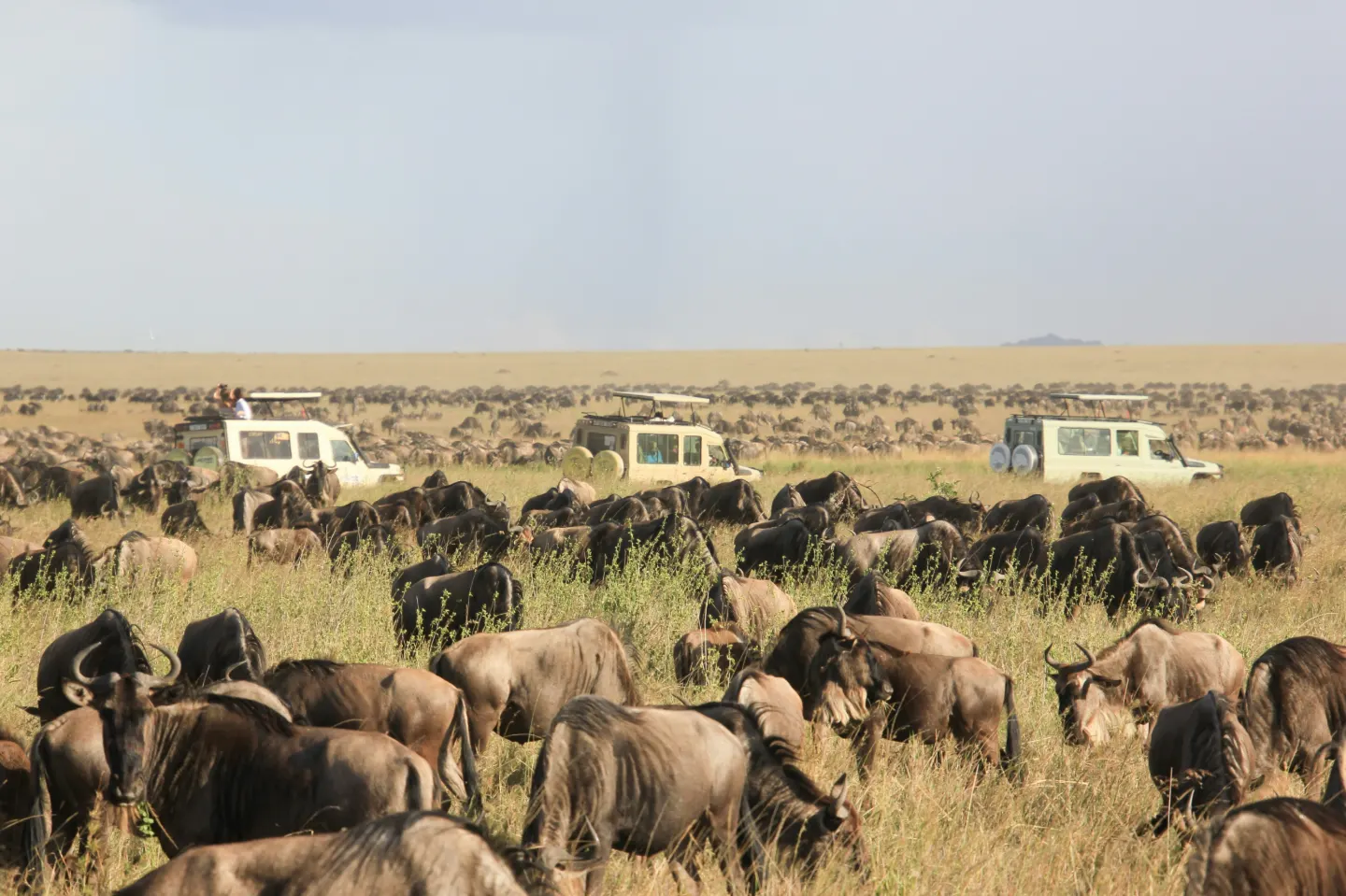
From vast grasslands and remarkable predators to the annual movements of millions of grazing animals, Tanzania's Serengeti is one of Africa's defining safari landscapes. This guide explores when to visit, where to stay and how to experience its extraordinary wilderness.
The Serengeti: A Landscape Without Boundaries
The first impression of the Serengeti is often one of scale. Grasslands stretch towards a distant horizon, interrupted by rocky outcrops, scattered acacia trees and the occasional movement of wildlife across the plains. On clear mornings, the openness creates a sense of space that can be difficult to appreciate until you experience it from the ground.
Yet the Serengeti is far more varied than its familiar photographs suggest. Its southern plains, central river valleys, western woodlands and northern hills support different habitats and wildlife movements throughout the year. The park is part of a much larger ecosystem that extends beyond its boundaries, including the Maasai Mara in Kenya and the neighbouring Ngorongoro Conservation Area.
The Serengeti's international reputation is closely tied to the Great Migration, but it would be a mistake to regard the park as somewhere worth visiting only when enormous wildebeest herds are passing through. Resident predators, elephants, giraffes, buffalo, antelope and abundant birdlife make many parts of the park rewarding across the seasons.
Choosing the right safari begins with understanding that different areas of the Serengeti offer different experiences. A successful itinerary should match the region and season to your interests rather than simply promising that the migration will be visible.
Understanding the Great Migration
The Great Migration is one of the most celebrated wildlife phenomena in Africa. Vast numbers of wildebeest, together with zebras and other grazing animals, move through the wider Serengeti–Mara ecosystem in response to changing rainfall, grazing and water availability.
It is not a single journey that begins on a fixed date and follows an identical route every year. Nor is it limited to the dramatic river crossings that appear so frequently in wildlife documentaries. The migration is an ongoing cycle, influenced by weather patterns and conditions across an enormous landscape.
During roughly December to March, large herds are often found on the short-grass plains of the southern Serengeti and neighbouring Ndutu area. The calving period, commonly concentrated around January and February, is particularly notable because large numbers of young wildebeest are born over a relatively short period.
As the southern grasslands become less productive, the herds generally move northwest through the central and western portions of the ecosystem. Their progress varies, but the western corridor becomes important during parts of the late autumn and early winter period.
By approximately July through October, many migration herds may be found in the northern Serengeti and adjoining Maasai Mara ecosystem. This is the period associated with the famous Mara River crossings, although individual crossings remain unpredictable and can happen more than once.
The cycle then continues as rainfall and fresh grazing draw animals south again.
For travellers, the important lesson is simple: it is possible to plan around the broad seasonal pattern, but no responsible operator can guarantee a crossing, a particular herd location or a dramatic predator encounter.
Choosing the Best Time to Visit
January to March: Calving Season and Green Plains
The southern plains and Ndutu region are especially attractive during the early months of the year. Fresh grazing supports substantial numbers of migratory herbivores, and the calving period provides extraordinary opportunities to observe young animals and the predators that follow the herds.
The scenery is often green and expansive, with dramatic skies and excellent photographic possibilities. Rain showers can occur, and the movement of animals remains dependent on seasonal conditions.
A crucial geographical distinction is that some important calving-season areas lie in the Ngorongoro Conservation Area rather than inside Serengeti National Park itself. Your operator should explain which permits, accommodation areas and travel arrangements apply.
April to May: Rain, Changing Landscapes and Quieter Travel
The long-rains period can bring heavy showers and difficult road conditions, especially on remote tracks. Some accommodation providers reduce operations or offer seasonal rates.
For visitors willing to accept greater weather uncertainty, the landscape can be exceptionally beautiful. However, a well-planned itinerary and experienced local operator become particularly important.
This period should not be dismissed automatically, but it is less predictable for travellers who want consistently dry game-viewing conditions.
June to October: Dry-Season Safaris
The dry season is generally one of the most popular periods for visiting the Serengeti. Grass becomes shorter in many areas, wildlife viewing can be excellent, and conditions are often more comfortable for extended game drives.
The western and northern Serengeti may be especially relevant for travellers interested in following the migration. Later in the season, the Mara River region attracts visitors hoping to witness crossings.
Because the northern migration experience is highly sought after, suitable accommodation can book out well in advance. Visitors should also expect other safari vehicles at well-known locations during peak periods.
The Serengeti remains a wild environment, however, and a carefully chosen private or small-group safari can offer a rewarding experience without depending on a single famous sighting.
November to December: A Seasonal Transition
Short rains often begin to renew grazing across parts of the ecosystem. Migration herds may move south, while resident wildlife continues to occupy the central and other suitable regions.
This transitional period can be rewarding for travellers interested in landscapes, wildlife photography and a broader experience of the park.
Because the precise timing of rainfall varies, the most useful advice comes from operators familiar with the conditions expected in the area of your chosen accommodation.
The Different Regions of the Serengeti
Central Serengeti and Seronera
The central Serengeti, particularly around Seronera, is one of the park's most established safari areas. Its mix of grassland, rocky kopjes and riverine habitat supports wildlife throughout the year.
The area is particularly associated with big cats, including lions and leopards, although sightings are never guaranteed. It can be an excellent choice for first-time visitors because of its varied habitats and established accommodation infrastructure.
Central Serengeti also works well as part of a longer itinerary, providing a resident-wildlife experience alongside a more seasonal migration-focused region.
Southern Serengeti and Ndutu
The southern plains become especially important during the calving season. Their open landscapes create excellent opportunities for observing large groups of grazing animals and predator activity.
Ndutu is often included in Serengeti itineraries, but it is important to understand that the Ndutu area straddles the wider Serengeti–Ngorongoro ecosystem and that accommodation and activity rules can differ according to the exact location.
For travellers planning a January or February safari, this is one of the most important areas to discuss with an operator.
Western Corridor and Grumeti
The western corridor is characterised by woodland, grassland and river systems, including the Grumeti River.
Migration movements may pass through this region during parts of the year, and the area's riverine habitats add variety to the safari experience.
It is generally less convenient for a very short first-time itinerary than the central Serengeti, but it can be a rewarding choice when the season and travel arrangements make sense.
Northern Serengeti and the Mara River
The northern Serengeti offers rolling landscapes, river systems and access to areas associated with the migration's famous river crossings.
It is particularly attractive during the middle and later portions of the dry season, although migration patterns vary and crossings cannot be scheduled.
Travelling here can involve longer drives or domestic bush flights. For visitors whose main goal is the northern migration, staying in the appropriate area is usually far more practical than attempting repeated day trips from central Serengeti.
Wildlife Beyond the Migration
The Serengeti is one of the world's great wildlife ecosystems because of its resident animal populations as well as its seasonal movements.
Lions are among the park's most recognisable predators, often encountered in suitable grassland and kopje habitats. Leopards favour areas offering cover, including riverine woodland, while cheetahs are associated with open country where visibility and space support their hunting style.
Elephants, buffalo, giraffes, hippos and numerous antelope species occupy different parts of the park. The Serengeti also supports black rhinoceros, although sightings are uncommon and should never be expected.
Birdwatchers will find an extraordinary range of species, from large birds of prey to colourful bee-eaters, rollers and smaller grassland birds.
One of the joys of a Serengeti safari is learning to appreciate this broader ecosystem. A morning without a lion sighting may still reveal fascinating interactions between grazing animals, birds, insects and the changing landscape.
Getting to Serengeti National Park
For most visitors, the starting point is Arusha, northern Tanzania's principal safari hub.
International flights commonly arrive at Kilimanjaro International Airport, with onward road or air arrangements depending on the itinerary. Arusha Airport also serves domestic and safari aviation routes.
A traditional northern-circuit safari travels from Arusha towards destinations such as Tarangire, Lake Manyara or the Ngorongoro Highlands before reaching the Serengeti. This approach allows travellers to experience changing landscapes along the route, although road journeys can be long.
Alternatively, light-aircraft transfers connect regional airports and airstrips serving different parts of the Serengeti. These flights can save considerable travel time and make more remote itineraries practical.
Safari flights often have strict luggage limitations, sometimes requiring soft-sided bags. Travellers should confirm the precise allowance with their operator and avoid assuming that international airline baggage rules apply.
When comparing options, consider the whole journey rather than the flight or drive in isolation. A shorter transfer may justify a higher price if it provides an extra day of meaningful safari activity.
Where to Stay in the Serengeti
Accommodation ranges from seasonal tented camps to permanent lodges and high-end wilderness properties.
Permanent Lodges and Camps
Permanent accommodation can offer convenience and comfort, particularly in well-established areas such as the central Serengeti. Facilities vary widely, from relatively simple safari lodgings to luxurious properties with extensive services.
The most important consideration is the property's location in relation to the wildlife experiences you want.
Seasonal Migration Camps
Some camps move between selected locations during the year to follow broad migration patterns. These mobile or seasonal arrangements can provide access to particular areas during their most interesting periods.
However, a migrating camp does not guarantee that the herds will be nearby on every day of your visit.
Ask operators about exact camp locations, transfer arrangements and the degree of flexibility available if seasonal conditions differ from expectations.
Luxury and Remote Safari Camps
Exclusive camps may offer smaller guest numbers, exceptional guiding and access to more remote surroundings. Their prices can be substantial, especially when flights, park fees and other logistical costs are included.
Choose accommodation for the quality of its location and guiding rather than assuming that a higher price automatically means better wildlife sightings.
How Many Days Do You Need?
A Serengeti safari is rarely improved by rushing.
Three nights can provide an excellent introduction when accommodation is well located and travel time is kept manageable. It allows several game drives, although visitors should recognise that even three nights only reveals a small part of the ecosystem.
Four to five nights provides more flexibility and can support a combination of central Serengeti and a second region suited to the season.
Six or seven nights allows a more relaxed safari, particularly for travellers who want to explore the migration and resident wildlife without continually moving accommodation.
If Serengeti forms part of a wider northern Tanzania itinerary, allow additional time for Ngorongoro, Tarangire or other destinations rather than counting long transfer days as full safari days.
What Does a Serengeti Safari Cost?
The Serengeti can be an expensive destination, especially during peak migration periods and when remote accommodation is involved.
Prices depend on the season, accommodation standard, transport method, group size and the activities included. Government park fees and conservation charges also contribute significantly to the overall cost.
A shared overland safari is generally structured differently from a private guided vehicle or fly-in luxury itinerary. Neither is inherently better; the appropriate choice depends on the traveller's expectations and budget.
Before booking, check whether a quotation includes accommodation, meals, park entry fees, applicable concession or camping fees, transfers, domestic flights, guiding and vehicle costs.
Also clarify whether the operator has accounted for every required night and whether the itinerary allows adequate time for travel between regions.
Published tariffs and individual lodge rates change. For that reason, a detailed, dated quotation is more useful than relying on a single headline price in a travel article.
Suggested Serengeti Itineraries
Three Nights: The Central Serengeti
Base yourself in the Seronera region and focus on its varied resident wildlife. This is particularly suitable for first-time visitors or travellers adding the Serengeti to a wider northern Tanzania safari.
Five Nights: Two Complementary Regions
Combine central Serengeti with an area suited to your travel season. During the early months, that may mean the southern plains; during parts of the dry season, a northern or western area may be more appropriate.
This option balances wildlife variety with realistic travel arrangements.
Seven Nights: A More Complete Serengeti Experience
A week allows travellers to slow down, spend more time in productive areas and combine distinct habitats without making every day a transfer day.
For photographers or wildlife enthusiasts, the extra time can be particularly valuable because animal movements and weather conditions remain unpredictable.
Responsible Safari Travel and Safety
The Serengeti is a protected wilderness, not a controlled wildlife attraction. Visitors must respect park rules, remain in designated areas and follow the instructions of qualified guides.
Animals should never be approached, fed or disturbed for photographs. Off-road driving and other activities are governed by local regulations and applicable permissions; travellers should not assume that rules are identical throughout Tanzania's protected areas.
Tanzania's northern safari regions also require appropriate travel-health preparation. Seek professional advice about malaria prevention, vaccinations and other medical considerations before departure.
Comprehensive insurance, including suitable emergency medical evacuation cover, is strongly recommended for remote safari travel.
Choosing operators with experienced guides, appropriate licences and credible conservation practices helps support responsible tourism and protect the extraordinary landscapes travellers come to experience.
Frequently Asked Questions
Is the Serengeti worth visiting outside the Great Migration?
Yes. The Serengeti supports resident wildlife throughout the year, and areas such as the central Serengeti can be rewarding even when the largest migrating herds are elsewhere.
When is the best time to see the Great Migration?
That depends on which stage you want to see. Calving is commonly associated with the southern plains early in the year, while northern river crossings are more frequently sought between approximately July and October. Timing changes with rainfall and herd movements.
Can you guarantee a Mara River crossing?
No. Crossings are unpredictable, and some visitors spend several days in the area without witnessing one.
Is Serengeti suitable for a first safari?
Yes. A well-designed itinerary with an experienced operator can be an excellent introduction to African wildlife, particularly if the accommodation and regions are chosen to match the season.
Can I combine Serengeti with Ngorongoro?
Yes. This is one of the most popular combinations in northern Tanzania, although travel time, accommodation and conservation-area entry requirements need to be considered.
Is a fly-in safari better than a road safari?
Each has advantages. Flying reduces some transfer times, while overland travel can provide more opportunity to explore destinations along the northern safari circuit. Cost, time and personal interests should guide the decision.
Planning Your Serengeti Adventure
The Serengeti is a destination that rewards patience and thoughtful planning. Its extraordinary wildlife is inseparable from the open grasslands, river valleys, seasonal rainfall and vast movements that define the ecosystem.
For some travellers, the dream is to witness the Great Migration. For others, it is a quiet morning among the kopjes, the sight of a leopard resting in a tree or the simple pleasure of watching wildlife move freely across an immense landscape.
The best safari is not necessarily the one that promises the greatest number of sightings. It is the one that places you in the right environment, at a suitable time of year, with enough space to appreciate what makes the Serengeti remarkable.
As OffGrid Expeditions grows, travellers will be able to discover independent safari operators and request quotations for journeys through Tanzania and beyond. In the meantime, use this guide to understand the destination, compare travel approaches and decide what kind of Serengeti experience would be most meaningful to you.