The Complete Guide to Ngorongoro Crater, Tanzania
Explore Tanzania's Ngorongoro Crater, from its extraordinary wildlife and dramatic landscapes to the best time to visit, safari accommodation, costs and practical itineraries.
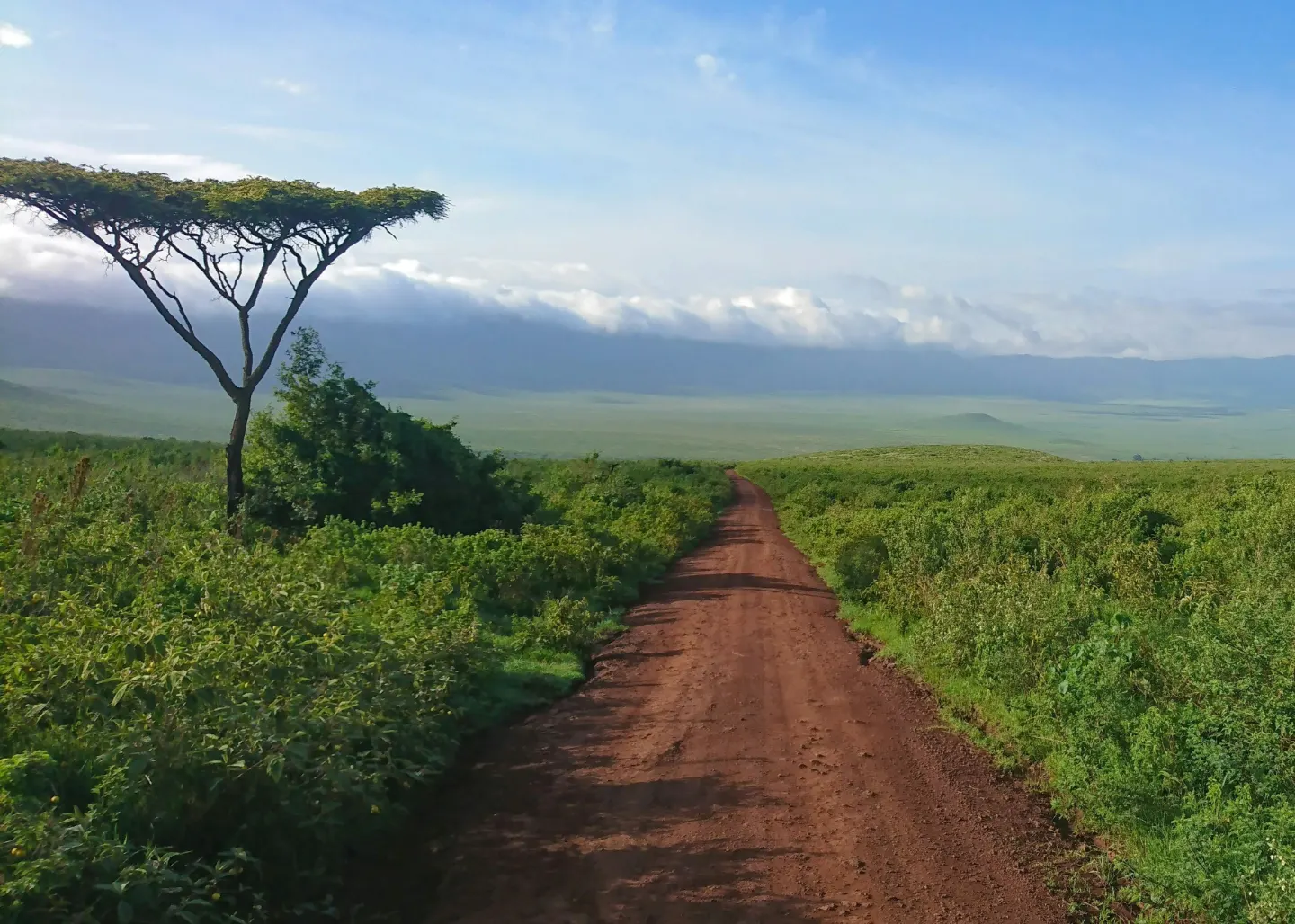
Few places in Africa make such a powerful first impression as Ngorongoro Crater. From its forested rim, an immense volcanic landscape opens below, revealing grasslands, lakes and woodland that support an extraordinary concentration of wildlife. For travellers exploring northern Tanzania, Ngorongoro offers a safari experience unlike almost anywhere else.
A World Within a Crater
The road climbs steadily through the highlands of northern Tanzania, passing forests and small settlements before reaching the edge of an extraordinary landscape.
Beyond the trees, the ground falls away into the vast Ngorongoro Crater. Its walls frame a world of grassland, woodland and seasonal water, with distant animals appearing as tiny movements across the crater floor.
The sheer scale of the scene is difficult to appreciate from photographs.
Ngorongoro is the remains of an ancient volcano whose collapse created one of the world's largest intact, unfilled volcanic calderas. Today, its floor forms an ecosystem that supports an exceptional diversity of wildlife within a relatively compact area.
The crater is part of the much larger Ngorongoro Conservation Area, a landscape recognised internationally for its ecological, geological and cultural importance.
Unlike a conventional national park, the wider conservation area has historically accommodated both wildlife conservation and Maasai pastoralist communities. This relationship between people, land and conservation is an important part of Ngorongoro's identity, although management and community circumstances continue to evolve.
For visitors, Ngorongoro provides an extraordinary opportunity to understand how landscape and wildlife interact, while offering a dramatic contrast to the expansive plains of the nearby Serengeti.
What Makes Ngorongoro Special?
The crater's defining characteristic is its geography.
Steep volcanic walls surround an extensive floor containing grasslands, swamps, woodland and the seasonal Lake Magadi. These habitats support numerous grazing animals, predators and birds.
The enclosed landscape creates excellent opportunities for wildlife observation, particularly because several habitats can be explored during a single game drive.
However, the crater should not be regarded as a wildlife enclosure. Animals are wild, ecological conditions change and the surrounding conservation landscape is connected to the broader Serengeti ecosystem.
Ngorongoro is also significant because of its conservation importance. The wider area provides habitat for threatened species, including the black rhinoceros.
The possibility of encountering rhinos is one reason visitors are drawn to the crater, but sightings are never guaranteed. The animals remain protected wildlife, and their movements and locations cannot be predicted with certainty.
What makes Ngorongoro memorable is not simply the prospect of seeing a particular animal. It is the unusual combination of geological scale, concentrated wildlife and the sense of entering a remarkable natural landscape.
Wildlife in Ngorongoro Crater
Ngorongoro is known for its resident populations of large mammals.
Wildebeest, zebras, buffalo and various antelope species occupy the open grasslands. Lions are among the crater's notable predators, while spotted hyenas are frequently associated with its grassland habitats.
Elephants may be encountered in suitable areas, particularly mature bulls, although their distribution changes with conditions. Hippos inhabit wetland areas, and numerous bird species occur around the crater's lakes, woodland and open plains.
The wider conservation area also supports leopards and other predators, though particular species may be much less frequently encountered on the crater floor.
One notable distinction from the Serengeti is that giraffes are generally absent from the crater floor, despite being found elsewhere in northern Tanzania. The crater's steep terrain and ecological conditions are among the factors associated with their absence.
Wildlife encounters depend on season, weather, animal movements and the location of the game drive.
A knowledgeable guide can make the experience particularly rewarding by interpreting animal behaviour and explaining how the different habitats support the species living there.
When Is the Best Time to Visit?
Ngorongoro can be visited throughout the year, although seasonal conditions affect the landscape and game-viewing experience.
June to October: The Cooler Dry Season
The dry season is popular with safari travellers exploring northern Tanzania.
Grass may be shorter in some areas, and conditions can be favourable for observing wildlife. Morning temperatures on the crater rim can be surprisingly cold because of the elevation.
The crater is also a popular destination, so visitors may encounter other vehicles at well-known sightings.
November to March: Green Landscapes
Seasonal rainfall transforms the highlands and surrounding plains.
The crater can appear particularly beautiful during this period, with lush grassland, dramatic clouds and changing light across the caldera.
Wildlife remains present, and the wider region is especially interesting for travellers combining Ngorongoro with the southern Serengeti and Ndutu during the migration calving season.
April to May: The Long Rains
Heavier rainfall may occur during these months, producing mist, wet roads and occasional travel disruption.
The landscape can be spectacularly green, but conditions require greater flexibility.
Visitors should discuss access, vehicle suitability and seasonal arrangements with their operator before confirming an itinerary.
The Crater Rim and the Crater Floor
There are two distinct experiences at Ngorongoro.
The crater rim provides the famous panoramic views, with vegetation, changing weather and elevated viewpoints overlooking the caldera.
The crater floor is where the principal vehicle-based wildlife viewing takes place.
Access is controlled, and visitors ordinarily descend using authorised routes and appropriate vehicles. Crater visits are subject to conservation regulations, operating hours and applicable fees.
Time on the crater floor is typically limited under local rules, so guides must plan their routes carefully.
This is not a destination where visitors should assume they can explore independently without the appropriate arrangements.
A well-organised guided game drive is generally the practical choice.
Getting to Ngorongoro
Ngorongoro is commonly visited as part of Tanzania's northern safari circuit.
The principal starting point is Arusha, from which travellers journey west towards the highlands.
Many itineraries combine Ngorongoro with Tarangire National Park, Lake Manyara and the Serengeti.
Road travel is a popular approach, allowing visitors to experience the changing landscapes of northern Tanzania. Journey times vary with traffic, weather, road conditions and the selected accommodation.
For visitors combining Ngorongoro with the Serengeti, the crater often forms a convenient stop along an overland route.
It is important to distinguish between time spent travelling across the conservation area and the time allocated for wildlife viewing on the crater floor.
A realistic itinerary allows for both.
Where to Stay
Accommodation on the Crater Rim
Several lodges are located near the crater rim, offering convenient access to the viewpoints and descent routes.
Their elevated position can provide spectacular scenery, but temperatures may be considerably cooler than those in the lower-lying plains.
Crater-rim accommodation can also command premium prices because of its location.
Karatu and the Surrounding Highlands
Karatu offers a range of accommodation options in the highlands outside the crater's immediate rim area.
Staying here can provide flexibility and potentially better value, although visitors must account for transfer time and conservation-area access requirements.
Combining Ngorongoro With the Serengeti
Travellers undertaking a longer northern Tanzania safari often spend one or two nights near Ngorongoro before continuing towards the Serengeti.
This creates a contrast between the concentrated wildlife habitats of the crater and the vast grassland ecosystems further west.
For more information about that journey, read our Complete Guide to Serengeti National Park, Tanzania.
How Many Days Do You Need?
For many visitors, one well-planned crater game drive provides a rewarding introduction to Ngorongoro.
However, a single crater excursion should not be confused with experiencing the entire conservation area.
Spending one or two nights nearby allows time to enjoy the crater rim, accommodate travel arrangements and continue towards other northern Tanzania destinations without rushing.
Travellers interested in the wider conservation area, its landscapes and cultural or archaeological attractions may want additional time, subject to the activities and access currently permitted.
A safari itinerary should avoid attempting to cover Ngorongoro, the Serengeti and several additional parks in only a few days.
The quality of time spent in each destination matters far more than the number of places included.
What Does a Ngorongoro Safari Cost?
Ngorongoro can be one of the more expensive components of a northern Tanzania safari.
Costs can include conservation-area entry fees, separate crater-service or vehicle charges, accommodation, transport and guiding.
These fees are distinct from those that may apply in Serengeti National Park.
Rates can change, and some charges depend on visitor category, vehicle arrangements and the applicable tariff period.
Travellers should request a detailed quotation showing all conservation fees and activities rather than assuming the advertised accommodation price includes a crater game drive.
When comparing operators, ask exactly how much time is allocated for the crater visit and whether the itinerary includes realistic travel allowances.
Responsible Travel in Ngorongoro
Ngorongoro is both a protected wildlife landscape and an area of considerable cultural importance.
Visitors should respect conservation rules, remain on permitted roads and avoid disturbing wildlife for photographs.
The popularity of the crater makes responsible guiding especially important. Crowding animals, obstructing their movement or leaving designated routes can undermine both conservation and the visitor experience.
The wider conservation area's relationship with Maasai communities also deserves thoughtful consideration. Travellers interested in cultural experiences should favour arrangements that are respectful, appropriately authorised and beneficial to participating communities.
Travel-health precautions are important throughout northern Tanzania. Seek current medical advice before departure, especially regarding malaria prevention, vaccinations and emergency medical coverage.
Frequently Asked Questions
Is Ngorongoro Crater worth visiting?
Yes. Its dramatic volcanic landscape and concentration of wildlife make it one of northern Tanzania's most distinctive safari destinations.
Can you see the Big Five in Ngorongoro?
The wider Ngorongoro Conservation Area supports all five species, but individual sightings on a crater game drive are never guaranteed. Leopards in particular are much less commonly seen on the crater floor.
Is Ngorongoro part of Serengeti National Park?
No. Ngorongoro Conservation Area and Serengeti National Park are separate protected areas, although they form part of the same wider ecological landscape.
How long does a crater safari take?
Crater-floor visits are subject to operating and time restrictions. Operators generally arrange a substantial part of a day for the excursion, including descent, wildlife viewing and ascent.
Is the crater suitable for first-time safari visitors?
Yes. The combination of dramatic scenery and varied wildlife makes it an excellent addition to a first northern Tanzania itinerary.
Can I visit Ngorongoro and Serengeti on the same trip?
Absolutely. They are frequently combined, and the contrasting landscapes are one of the great attractions of the northern safari circuit.
Planning Your Ngorongoro Adventure
Ngorongoro is a destination best appreciated as more than a famous viewpoint or a convenient stop between safari lodges.
Its volcanic history, wildlife habitats and ecological importance make it a genuinely remarkable place.
For many visitors, the unforgettable moment comes when the road reaches the rim and the landscape opens below. For others, it is the quiet observation of animals moving across the crater floor beneath the enormous walls.
The most rewarding journey gives enough time to appreciate both.
Combined with the Serengeti, Ngorongoro offers an exceptional introduction to Tanzania's extraordinary natural heritage, revealing two very different landscapes connected by the wider rhythms of the African wilderness.
Explore the OffGrid Expeditions Destination Guides as you plan a journey through Tanzania and discover the landscapes that make African safari travel so memorable.