A Day on Safari in the Serengeti
From sunrise game drives to evenings beneath African stars, discover the rhythm of a day on safari in Tanzania's Serengeti and the small moments that make it unforgettable.
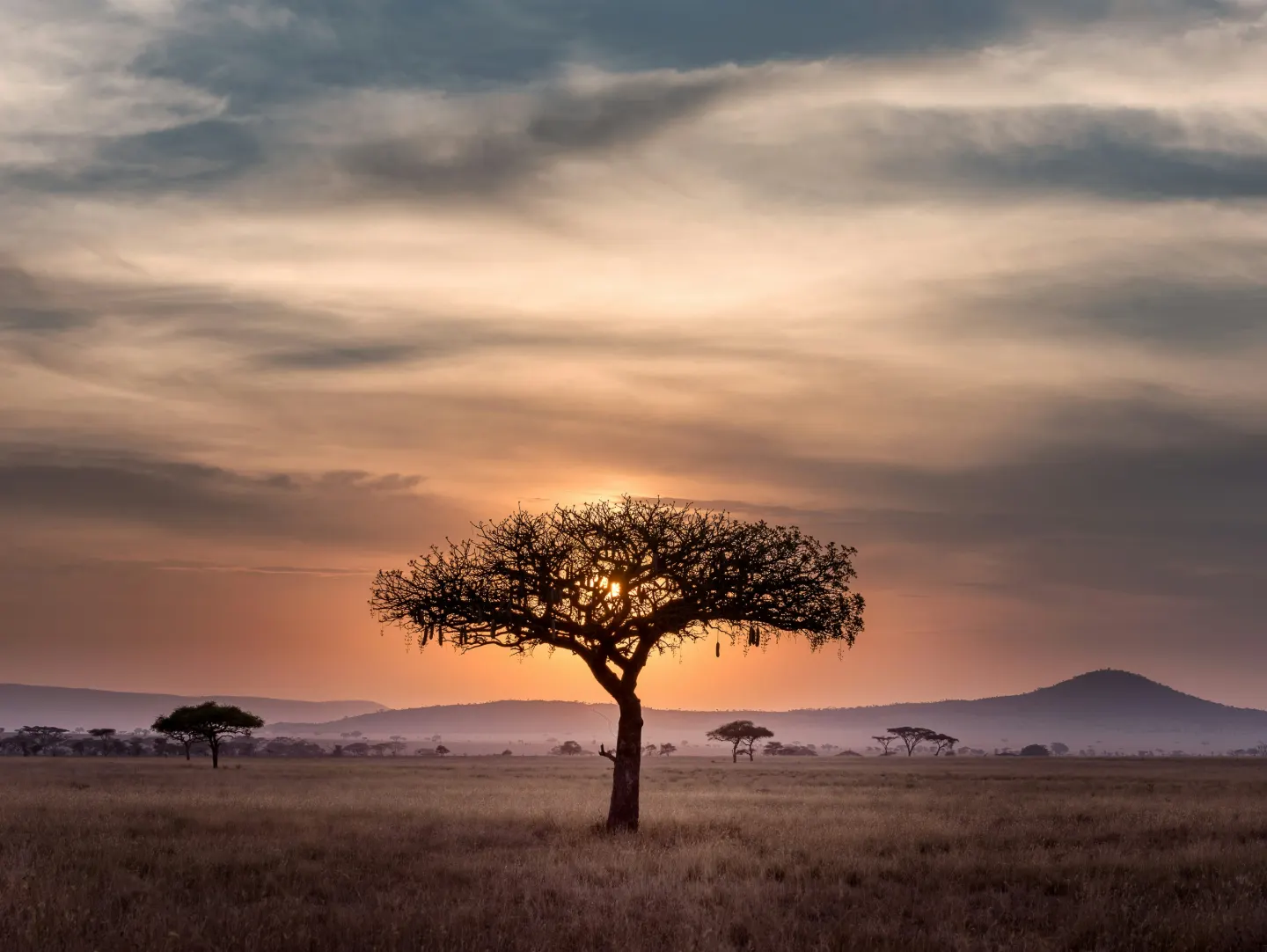
There is a particular rhythm to life on safari. It begins before sunrise, follows the movement of wildlife through the changing light and slows as darkness settles over the African plains. In Tanzania's Serengeti, an ordinary day can become extraordinary without anyone knowing exactly when or how.
Before the Sun Reaches the Plains
Long before the first light reaches the grasslands, a safari camp begins to stir.
The air is cool, and the quiet of the night has not yet completely surrendered to morning. Somewhere beyond the tents or lodge buildings, an unfamiliar bird calls. A breeze moves through the trees, carrying the faint sounds of a wilderness that has remained active throughout the night.
For travellers accustomed to the regular routines of city life, the early start can feel unusual. Yet on safari, the hours around sunrise are among the most rewarding times to be outdoors.
Many animals are active before the heat of the day. The low angle of the sun transforms the landscape, bringing warmth to the grass and throwing long shadows across the open plains.
A simple breakfast or an early cup of coffee may be followed by the departure of a safari vehicle into the surrounding wilderness.
There is no certainty about what the morning will bring.
That uncertainty is part of the attraction.
The First Game Drive
As the vehicle moves away from camp, the landscape gradually becomes visible.
The Serengeti is celebrated for its enormous grasslands, but its terrain is far from uniform. Rocky kopjes rise above the plains, woodland follows watercourses and scattered trees create quiet pockets of shade.
Every habitat offers different opportunities.
A giraffe may be feeding among the trees, barely acknowledging the vehicle passing at a respectful distance. Impalas might be gathering in a clearing, while birds move through the branches in search of insects.
The guide watches the landscape carefully, interpreting tracks and animal behaviour while navigating the available routes.
For visitors, this can be one of the most fascinating aspects of a guided safari. The wilderness becomes more understandable as seemingly ordinary details begin to reveal their significance.
A cluster of animals looking in the same direction may suggest that something has disturbed them. Fresh tracks on a road can provide clues about an animal's movement during the night.
Sometimes these signs lead to a remarkable sighting.
At other times, they simply become part of the pleasure of learning about the environment.
The Moments Everyone Hopes For
The Serengeti is famous for lions, leopards, cheetahs and the vast herds associated with the Great Migration.
There is always the possibility that a game drive will produce one of the encounters travellers have imagined for years.
Perhaps a group of lions will be found resting beside a kopje, their attention divided between the surrounding grassland and the distant movement of grazing animals.
Perhaps elephants will emerge from a wooded area, their slow movements offering an entirely different kind of spectacle.
During the appropriate season, enormous numbers of wildebeest may occupy the wider landscape, creating a sense of movement that extends far beyond the immediate surroundings of the safari vehicle.
Yet the animals are not performing for visitors.
A lion may sleep through an entire sighting. A leopard may remain concealed among the branches of a tree. A herd may change direction and disappear before anyone can obtain the photograph they hoped for.
Experienced safari travellers learn to appreciate these moments without expecting them to unfold according to a particular script.
The opportunity to observe wildlife behaving naturally is what makes the experience meaningful.
When the Heat Begins to Rise
As the morning advances, the character of the landscape changes.
The light grows stronger and shadows become shorter. The coolness of dawn gives way to warmer conditions, particularly during the hotter parts of the year.
Wildlife activity may become less obvious as animals seek shade or reduce their movements.
For many safari itineraries, this is the time to return to camp for lunch and a period of rest.
Other itineraries, especially those exploring more distant regions, may involve a longer game drive with a packed meal at a suitable designated location.
The exact programme depends on the accommodation, location, park rules and activities offered by the operator.
Whatever the arrangement, the slower middle part of the day creates an opportunity to appreciate something that is often lost in the excitement of game viewing: the simple experience of being in the African wilderness.
An Afternoon Without Urgency
A safari is not only about the hours spent searching for animals.
At camp, the afternoon may provide time to read, rest, enjoy the surroundings or reflect on the morning's discoveries.
The sounds of wildlife remain part of the atmosphere, even when no animals are visible.
Wind moves through the vegetation, birds continue their activity and the distant landscape seems to settle into the slower rhythm of the day.
For some travellers, this unhurried time becomes one of the most memorable parts of the journey.
There is no need to be somewhere else, answer a stream of messages or move quickly from one attraction to another.
The wilderness encourages a different relationship with time.
This is also an important reason to avoid overcrowded itineraries.
Travelling through too many destinations in too few days can reduce a safari to a succession of transfers and rushed sightings, leaving little opportunity to enjoy the atmosphere that makes each place distinctive.
The Return of the Afternoon Light
As the sun begins to descend, the plains take on a softer appearance.
Golden light reaches across the grasslands, and animals may become more active as temperatures ease.
An afternoon game drive offers another opportunity to explore the surrounding habitats.
The experience often feels different from the morning.
Shadows lengthen, familiar places take on new colours and the approach of evening changes the movements and behaviour of wildlife.
A herd of elephants crossing an open plain may be transformed into a silhouette against the horizon. A group of zebras grazing in soft light can become a scene of extraordinary beauty, even without a predator or dramatic event nearby.
For photographers, these hours are particularly appealing.
But the finest memories are not always those captured through a camera.
Sometimes the most memorable moment is simply watching the landscape change while the vehicle remains still.
The Last Light of Day
As sunset approaches, the guide begins the return journey towards camp, observing the applicable park and accommodation rules.
The Serengeti is a protected environment, and ordinary game drives within the national park must respect permitted routes and operating hours. Night drives are not universally available, and travellers should not assume that every camp or reserve offers the same activities.
The final moments of daylight can be among the most beautiful of the entire safari.
The sky changes colour, the grasslands darken and the outlines of trees become increasingly distinct against the horizon.
It is tempting to search for one more remarkable sighting before the day ends.
Yet the atmosphere itself often provides a fitting conclusion.
A safari does not need an extraordinary final encounter to be complete.
Evening in the Wilderness
Back at camp, the day's experiences begin to settle into memory.
Dinner may be served in a lodge dining room, beneath a sheltered outdoor area or in another setting appropriate to the property and weather.
The atmosphere varies widely between accommodation types, from simple tented camps to luxurious lodges, but the appeal of the evening is often similar.
Conversations return to the moments that stood out.
Someone remembers the behaviour of an elephant herd. Another recalls a guide explaining the tracks of a predator. A third may speak of an unexpected bird sighting or the changing colours of the afternoon sky.
The stories are rarely identical, even when everyone travelled in the same vehicle.
Each person notices different details, and each carries away a slightly different understanding of the day.
As darkness settles, the surrounding wilderness continues its own activities.
The animals do not observe the boundaries of a human itinerary. They feed, move, rest and hunt according to their needs, while visitors withdraw to the safety and comfort of their accommodation.
What Makes a Safari Day Extraordinary?
It is easy to measure a safari according to the number of famous animals encountered.
Travellers may begin with lists of species they hope to see, photographs they want to take or experiences they have watched in wildlife documentaries.
Those expectations are understandable.
Yet the most rewarding safaris often change the way visitors think about wildlife.
A morning spent observing the behaviour of a single elephant family may be more memorable than a hurried series of sightings. The discovery of an unfamiliar bird or the explanation of a subtle ecological relationship may provide a deeper appreciation of the landscape.
The Serengeti's great attraction lies not only in its extraordinary animals, but also in the freedom with which they inhabit their environment.
For a few days, visitors have the privilege of entering that world as observers.
The greatest reward is learning to appreciate what unfolds without trying to control it.
Planning Your Own Serengeti Safari
The rhythm of a safari day depends on the season, accommodation, location and activities arranged by the operator.
Some travellers prefer a full-day excursion exploring a more distant region, while others enjoy separate morning and afternoon drives with time to rest between them.
Both approaches can be rewarding.
The important consideration is choosing an itinerary that provides enough time in the landscape rather than trying to maximise the number of attractions visited.
For practical advice on seasonal wildlife movements, accommodation, the different regions of the park and suggested itineraries, read our Complete Guide to Serengeti National Park, Tanzania.
If you are particularly interested in the wildebeest migration, our Journal feature, Beyond the River Crossing: The Real Story of the Great Migration, explores the broader journey that defines the Serengeti ecosystem.
A day on safari is rarely predictable. The animals may be difficult to find, the weather may change and the most anticipated sighting may never happen.
But as the sun disappears beyond the plains and the memories of the day begin to settle, one thing often becomes clear.
The magic of the Serengeti lies not in knowing what will happen next, but in being there when it does.