Self-Drive or Guided Safari? Two Ways to Experience Kruger
Should you explore Kruger National Park on your own or with a professional guide? Discover the advantages of self-drive and guided safaris, and which experience suits you.
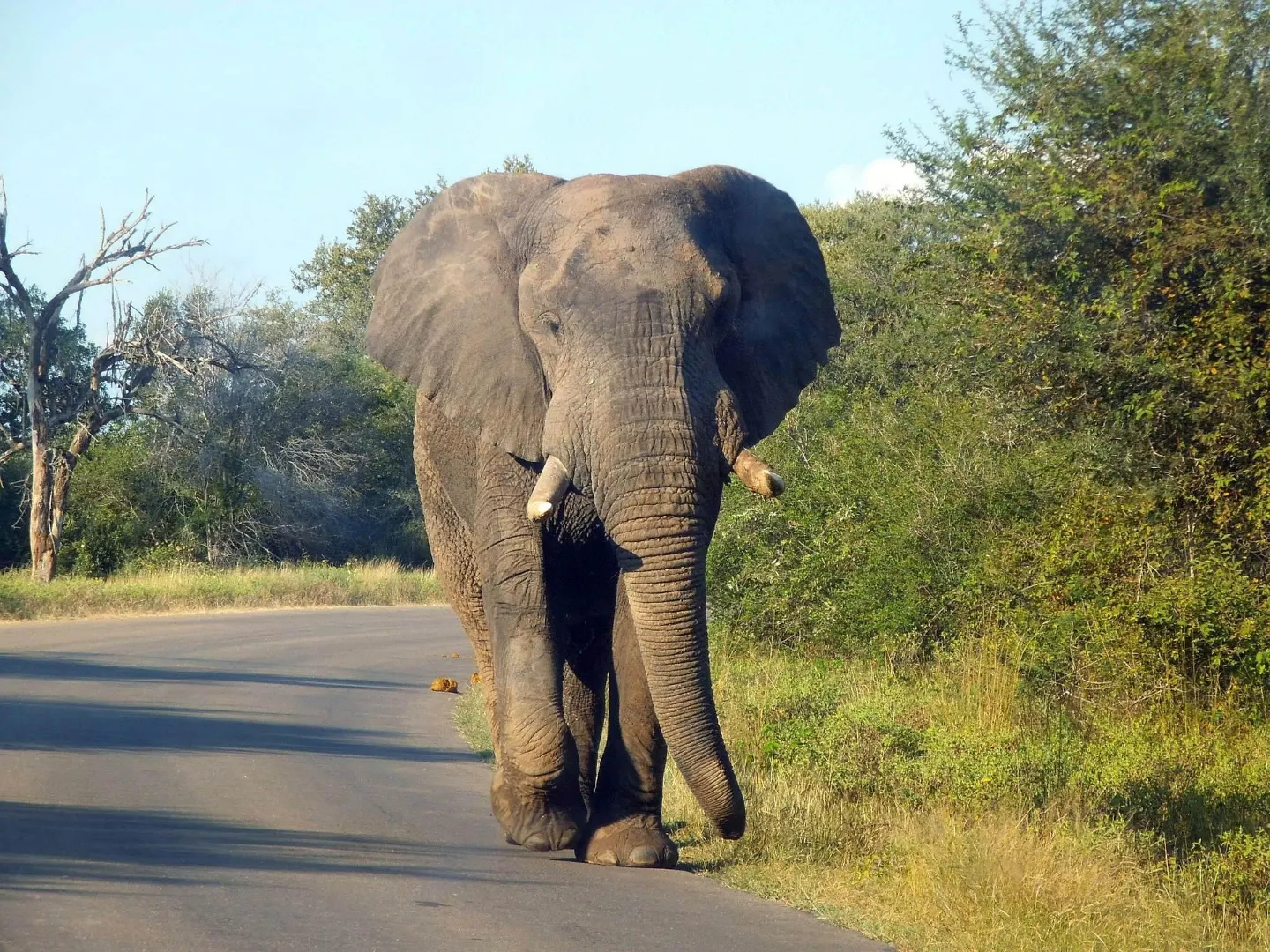
There is something unforgettable about discovering African wildlife from a vehicle you are driving yourself. Equally rewarding is the experience of exploring the bush with someone who understands its rhythms intimately. In Kruger National Park, both approaches offer remarkable opportunities, but they reveal the wilderness in different ways.
The Freedom of the Open Road
The first light of morning is beginning to reach the trees when you leave the rest camp.
The air is cool, the roads are quiet, and the landscape seems almost reluctant to reveal itself. Somewhere beyond the road, birds are calling, while the first rays of sunlight fall across the grass.
You turn onto a gravel road with no particular expectation other than the possibility that something remarkable may be waiting ahead.
Perhaps it will be an elephant moving slowly between the trees, a giraffe browsing in the soft morning light or a leopard resting in the branches above a dry riverbed.
Perhaps the first hour will pass without anything more dramatic than impalas crossing the road and hornbills searching for food.
That uncertainty is one of the great pleasures of a self-drive safari in South Africa's Kruger National Park.
With no fixed group itinerary and no pressure to move on, the journey unfolds according to your own curiosity. You decide when to stop, which direction to explore and how long to remain with a particular sighting.
For many travellers, this freedom is the essence of Kruger.
But there is another way to experience the same landscape, and it begins with placing the journey in the hands of someone who knows it exceptionally well.
The Value of a Good Safari Guide
A professional safari guide brings more than the ability to identify animals.
An experienced guide may notice movement in the grass long before passengers recognise what they are seeing. They can interpret tracks, explain the behaviour of birds and mammals, identify plants and help visitors understand the relationships that connect different parts of the ecosystem.
A broken branch, an alarm call or a set of fresh tracks can become part of a much larger story.
This knowledge changes the nature of wildlife observation.
Instead of simply seeing an elephant, you begin to appreciate how it uses its surroundings. Rather than concentrating entirely on spotting a predator, you may learn how smaller animals respond to signs of danger.
Guiding is also valuable for visitors who are unfamiliar with African wildlife or who would prefer not to manage driving and navigation while trying to observe animals.
A well-led safari can feel less like a sightseeing excursion and more like an introduction to the workings of the natural world.
What Makes Self-Drive So Special?
Kruger is one of Africa's most accessible major national parks for independent safari travel.
Its network of public roads, rest camps and visitor facilities allows travellers to explore substantial areas without requiring a private safari vehicle or specialised expedition arrangements.
The experience is particularly appealing to visitors who enjoy independence.
You might decide to spend an entire morning exploring a single road rather than attempting to cover a large distance. If a herd of elephants begins feeding near a waterhole, you can remain at a safe and appropriate distance for as long as conditions and park rules permit.
You are free to appreciate the smallest details of the landscape without having to accommodate the interests of an unfamiliar group.
There is also a particular satisfaction in discovering wildlife for yourself.
Spotting the shape of an animal among the branches or recognising movement on a distant hillside creates a sense of involvement that many self-drive enthusiasts find deeply rewarding.
However, the experience is not without limitations. The driver must divide attention between wildlife, road conditions, navigation and other vehicles. Less experienced visitors may also overlook subtle signs that an expert guide would notice immediately.
Self-drive rewards patience, but it also requires concentration and good judgement.
The Guided Safari Experience
A guided game drive changes the balance of responsibilities.
Travellers can concentrate on the landscape while the guide manages the vehicle, interprets wildlife behaviour and selects appropriate routes.
In Kruger, professionally guided activities may include morning, sunset and night drives offered through authorised arrangements.
Some of these experiences provide access to the park outside the normal hours available to self-drive visitors. That can create opportunities to observe wildlife behaviour at different times of day.
A guided drive is not a guarantee of better sightings. Wild animals remain unpredictable, and even the most knowledgeable guide cannot ensure that lions or leopards will appear.
What a guide can provide is context, experience and an informed approach to observing the bush.
For first-time visitors, this can be exceptionally valuable. The knowledge gained during a guided outing may even make subsequent self-drive days more rewarding.
The Difference Between Looking and Understanding
One of the most interesting aspects of a safari is how differently two people can experience the same sighting.
A visitor might notice a group of antelope standing beneath a tree and see little more than a peaceful scene.
A knowledgeable guide may recognise that the animals are watching something beyond the road, responding to an alarm call or changing their behaviour because of a predator nearby.
Neither perspective is necessarily wrong, but one reveals a deeper layer of information.
This does not mean that independent travellers cannot develop similar knowledge. Many experienced self-drive visitors have spent years studying animal behaviour, identifying birds and learning the ecology of the park.
Indeed, one of the great attractions of returning to Kruger is discovering how much more there is to understand.
Whether travelling independently or with a guide, curiosity remains the most valuable quality a visitor can bring.
Is a Guided Safari Safer?
Safety depends on the circumstances, the competence of the people involved and their willingness to respect wildlife.
An experienced guide understands animal behaviour and the importance of avoiding unnecessary risks. That knowledge is valuable, particularly around elephants, buffalo and other potentially dangerous wildlife.
However, independent travel in Kruger is also an established and legitimate way of experiencing the park, provided visitors follow the regulations.
Self-drive travellers must remain in their vehicles except in designated areas, obey speed limits, respect gate closing times and give animals sufficient space.
There is no place for attempting to approach wildlife closely for photographs, blocking animals on roads or leaving a vehicle to improve a sighting.
The best safari experience is never the closest encounter at any cost.
It is the one that allows people and wildlife to remain safe while the animals continue behaving naturally.
The Question of Cost
A self-drive safari can offer substantial flexibility when it comes to budgeting.
Visitors may choose accommodation inside the national park, bring their own food, use an existing vehicle or hire a suitable car. Daily conservation fees, accommodation, fuel and optional activities still need to be included in the overall budget.
Guided safaris vary considerably in price and structure.
A scheduled game drive from a SANParks rest camp is a different product from a multi-day private safari with exclusive accommodation, meals and a dedicated guide.
Likewise, staying in a private reserve adjoining Kruger may provide an all-inclusive experience with guiding arrangements and activities that differ from those available on the national park's public roads.
These distinctions matter when comparing costs.
A guided safari is not necessarily a luxury holiday, just as a self-drive safari is not automatically inexpensive. The total cost depends on the accommodation, season, transport and services selected.
The most useful comparison is between complete itineraries offering the kind of experience you actually want.
Photography and the Art of Patience
Wildlife photographers often have strong preferences about how they travel.
Self-drive safaris provide control over the pace of the journey, allowing photographers to remain with a suitable sighting while observing the park's regulations.
A guided safari provides another advantage: the opportunity to concentrate on photography while someone else handles the vehicle and interprets animal movements.
The photographer's position in the vehicle, lighting conditions, group size and ability to remain at a sighting can all influence the experience.
For specialist interests, a dedicated photographic safari may be worth considering.
Yet whatever the approach, patience is essential.
The finest wildlife photograph is not always taken during a dramatic chase or rare predator encounter. It may come from watching an elephant quietly feeding beside a river, a bird emerging into morning light or an animal behaving naturally because it has not been disturbed.
Why Combining Both Can Be Ideal
For travellers uncertain about which experience to choose, the answer does not necessarily have to be one or the other.
A self-drive itinerary with one or two professionally guided excursions can offer an excellent balance.
Independent days provide freedom and the opportunity to explore at a personal pace. Guided activities add expertise, different perspectives and, where permitted, access to times or activities unavailable to ordinary self-drive visitors.
This combination can be particularly appealing for visitors spending several nights inside Kruger.
A morning drive with a guide may introduce new ways of recognising wildlife behaviour, while an independent afternoon gives travellers the chance to apply what they have learned.
The two approaches complement one another rather than compete.
Choosing the Safari That Suits You
For travellers who enjoy independence, planning routes and exploring at their own pace, self-drive may be the most rewarding choice.
Those visiting Africa for the first time, seeking deeper interpretation or preferring to leave the driving to someone else may find guided safaris especially attractive.
Families, photographers, experienced safari enthusiasts and travellers with specific accessibility requirements may have different priorities again.
The important consideration is not which approach is universally better, but which allows you to experience the wilderness comfortably, respectfully and with genuine curiosity.
Neither freedom nor expertise should be mistaken for a guarantee of extraordinary sightings.
Kruger's wildlife remains wonderfully indifferent to our plans.
The Journey Is the Experience
A safari is often remembered for its most dramatic moments, but the experience is made up of much more than sightings.
It is found in the silence before sunrise, the changing colour of the landscape, the unexpected call of a bird and the sense that the wilderness exists entirely beyond our control.
Whether you are navigating a quiet road in your own vehicle or listening to a guide explain the tracks beside it, Kruger offers countless opportunities to appreciate the natural world.
The method of travel matters, but the attitude you bring matters more.
Be curious. Allow time. Respect the animals and their environment.
And accept that the most memorable moment of your safari may be the one you never expected.
Planning Your Kruger Safari
From choosing the right region and season to comparing rest camps, private reserves and travel itineraries, there is much to consider before setting out.
Our Complete Guide to Kruger National Park, South Africa explores the practical details and helps you decide how to plan your journey.
Whether you choose the independence of a self-drive adventure, the expertise of a professional guide or a combination of both, Kruger remains one of Africa's most rewarding wilderness destinations.
And sometimes, the greatest luxury is simply having the time to explore it slowly.